Demonstrators Mark the Oakland Federal Building as a Site of ICE Operations


While public attention has focused on the Twin Cities this month, where nearly 3000 federal mercenaries are engaged in a rampage of kidnapping and murder, Immigration and Customs Enforcement officers remain active all around the country, terrorizing communities and preparing for future surges that will be just as brutal as what is taking place in the Twin Cities. Yet this also opens up opportunities for people across the continent to act in solidarity with those targeted by ICE by striking blows elsewhere, revealing the weakness and unpopularity of federal forces and spreading their attention thin.
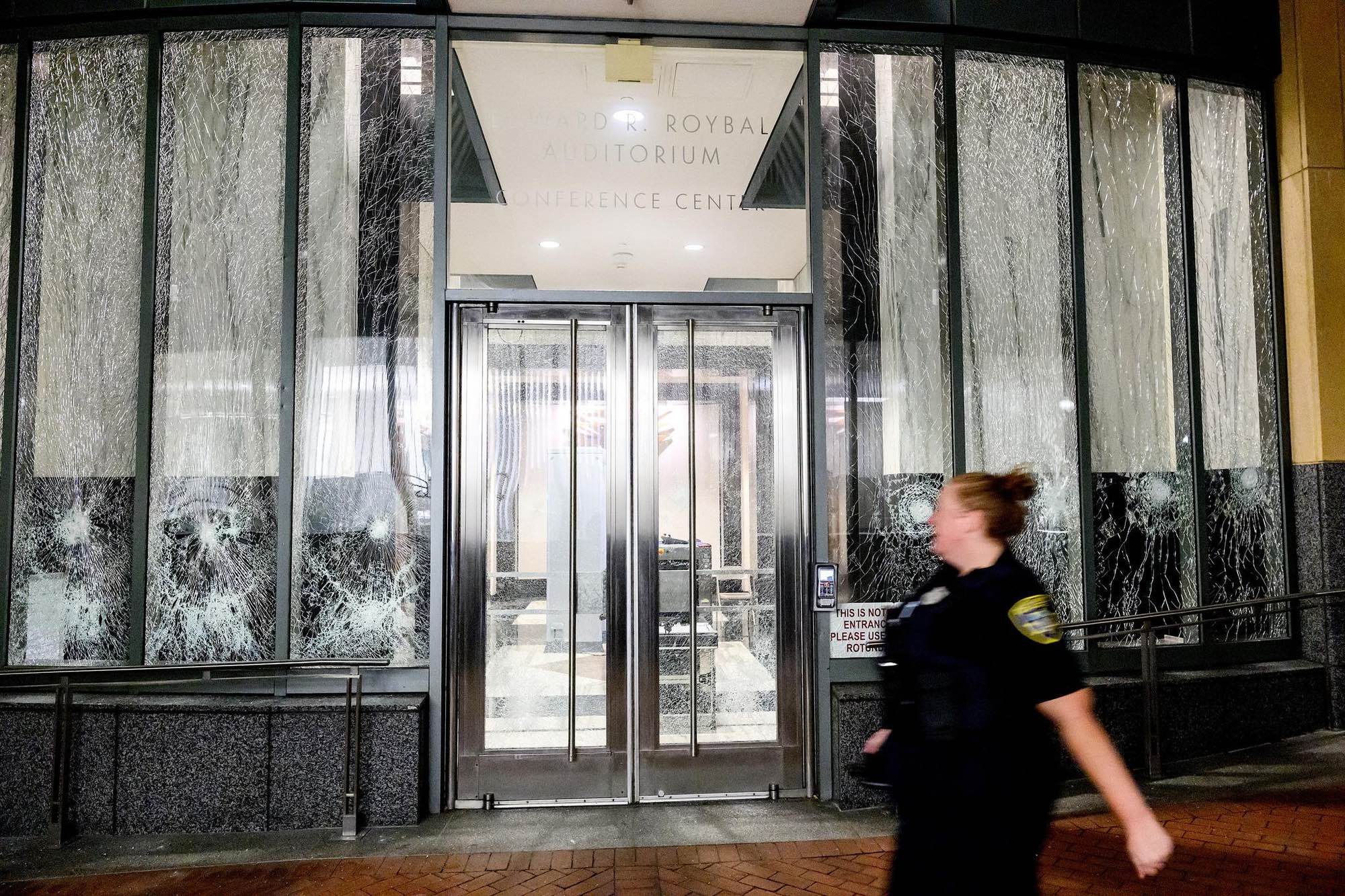
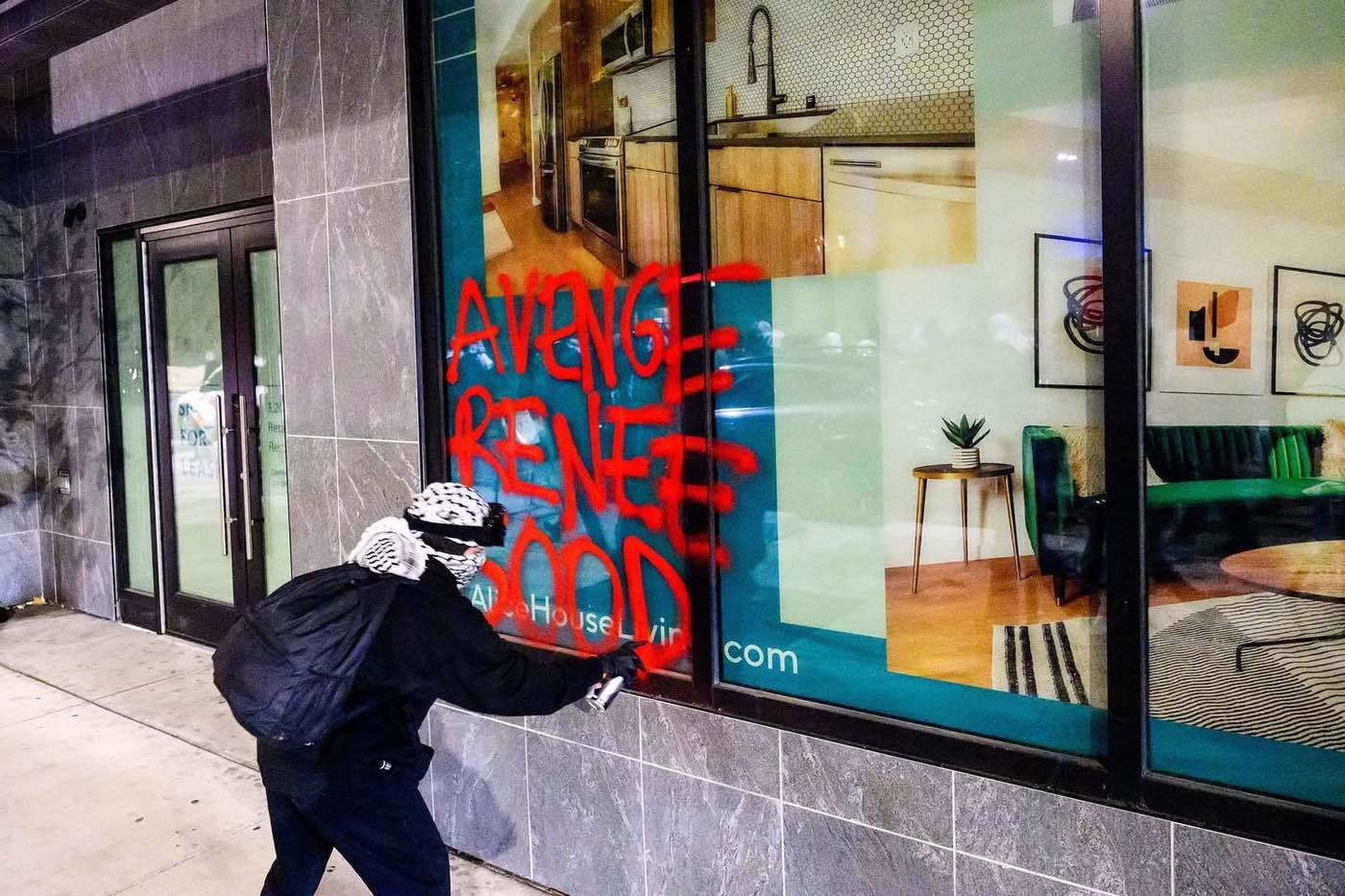
People in the Bay Area did precisely this on January 10, smashing 47 windows at the federal building in Oakland and covering it with spray paint in order to identify it as a base of ICE operations in the area. We received the following report as an anonymous submission.
Chinga la Migra: Oakland Federal Building Marked out
These days, everyone hates ICE. People across the political spectrum want them out of our cities. Since their massive expansion in 2025, new formations have been mobilizing together to push back against state violence in a way we haven’t seen in years. In the past, most recently in the uprisings against police brutality in 2020, a similarly broad base of revolutionary energy fizzled and was redirected into electoralism by liberals, while the left devolved into burnout and infighting about political tendencies or tactics. This time, if we’re going to seize the opportunity to create resilient movements and confront the worldwide rise of authoritarianism, we need to do something different.
In the Bay Area, we have been.
Over the last ten months, the fight against ICE has created a necessary shift in the organizing styles and relationships between different radical formations in the Bay Area. We have seen grassroots networks form neighborhood assemblies, dense Adopt-a-Corner networks keep watch over schools and work sites, and new relationships and strategic approaches grow from the conditions at sites of struggle.
One of the chief sites of struggle has been the federal immigration courthouse in San Francisco, where ICE was abducting people appearing for their immigration check-ins. Once this site was identified as a major point of intervention, community groups came together organically and began holding protective presence outside the courthouse. Underground anarchist groups began working in tandem with Marxist formations, aboveground mutual aid networks and community groups, lawyers, and even liberal nonprofit organizations in a way we had never seen before. Anarchists fought ICE agents in the streets alongside faith leaders outside the courthouse. Militants in black bloc held the line alongside priests and families during the federal incursion into Coast Guard Island; this eventually resulted in the federal government calling off the planned ICE surge into the Bay Area in October.
As our enemies become increasingly resourced, we consolidate our power by looking past sectarianism and working alongside individuals and organizations who align with our shared vision for the future, even if they hold different theories of change and political inspirations. This is done not by making ideological concessions to liberals, but rather by identifying our respective skillsets and common goals. People have maintained a principled clarity around the need to directly confront the state even while working with others who were not yet ready to take those actions.
This principled coalition building—holding a shared vision of what we are trying to accomplish through our many different positions, skills, and tactical tendencies—is working. Detentions at courthouses plummeted; they are now blocked by an injunction filed by the American Civil Liberties Union this January. ICE and the Department of Homeland Security are struggling to travel anywhere in the Bay Area without being chased and harassed by everyday people, thanks to the expansion of neighborhood watch groups and lines of communication across the region.
People in the Bay have recently identified another site of struggle: the Oakland Federal Building. Thanks to a broad network of researchers keeping tabs on ICE activities, the Federal Building was identified as a staging ground for ICE operations in the East Bay.
A coalition of anti-fascists involved in the fight against ICE in the Bay Area responded to the murder of Renee Good by planning a militant response on January 10. This action sought to attack federal infrastructure and impede ICE operations on a local level, both by publicly marking the Federal Building as a site of ICE operations and by causing material damage. This action also sought to revive a culture of militancy in the Bay Area that has waned over the past five years, and to display our strength and ability to fight back. It was orchestrated in solidarity with the uprisings in Minneapolis, and as an act of vengeance for Renee Good, Keith Porter, and all the lives lost at the hands of the “US” empire.
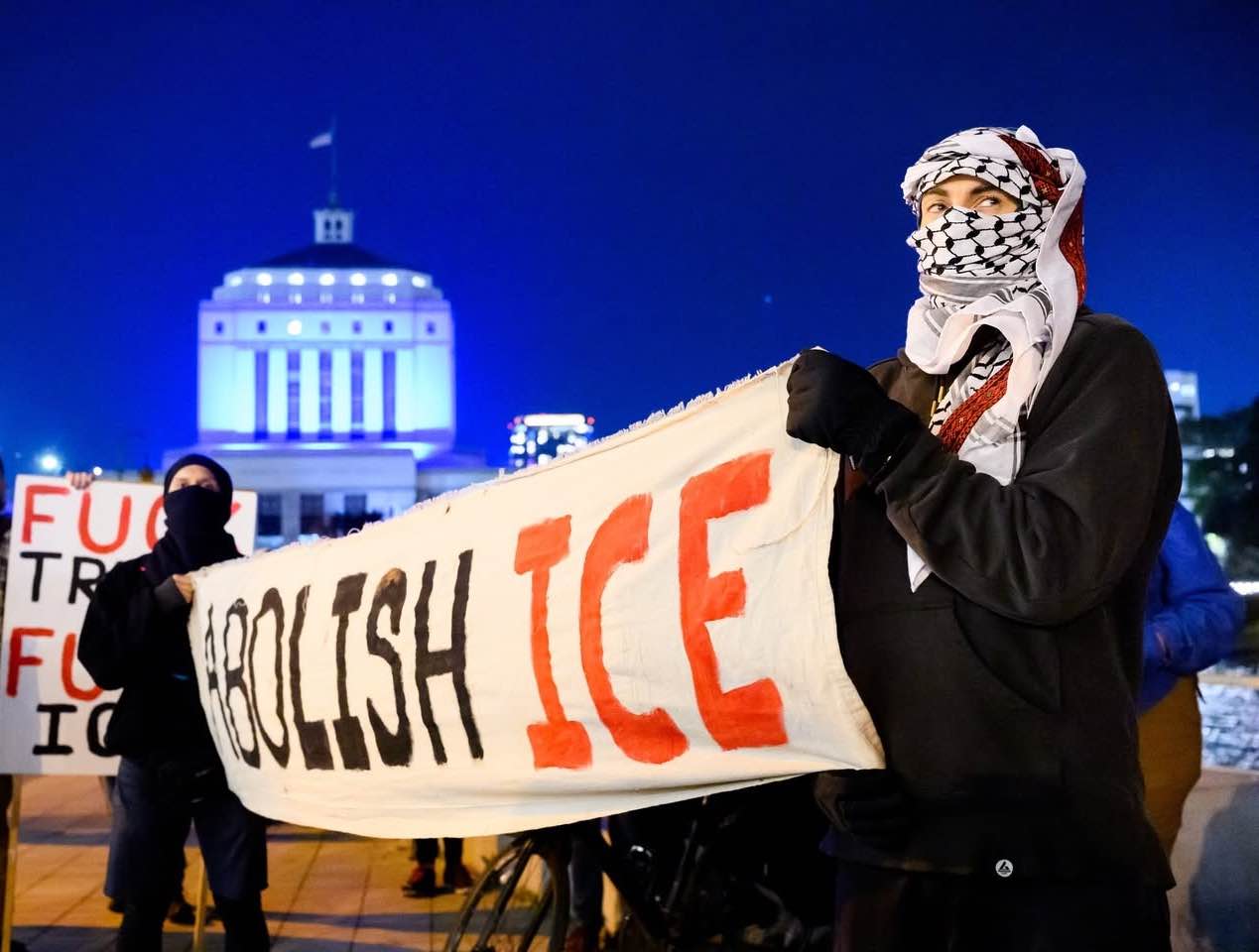
A crowd of 80-100 people gathered at the Lake Merritt Amphitheater just after sunset on January 10, 2026, most of them clad in black bloc and keffiyehs. Comrades delivered speeches about local initiatives to combat ICE abductions, the fight against the expansion of Flock cameras, and the links between the Palestinian struggle and the struggle against ICE. Then the march set out.
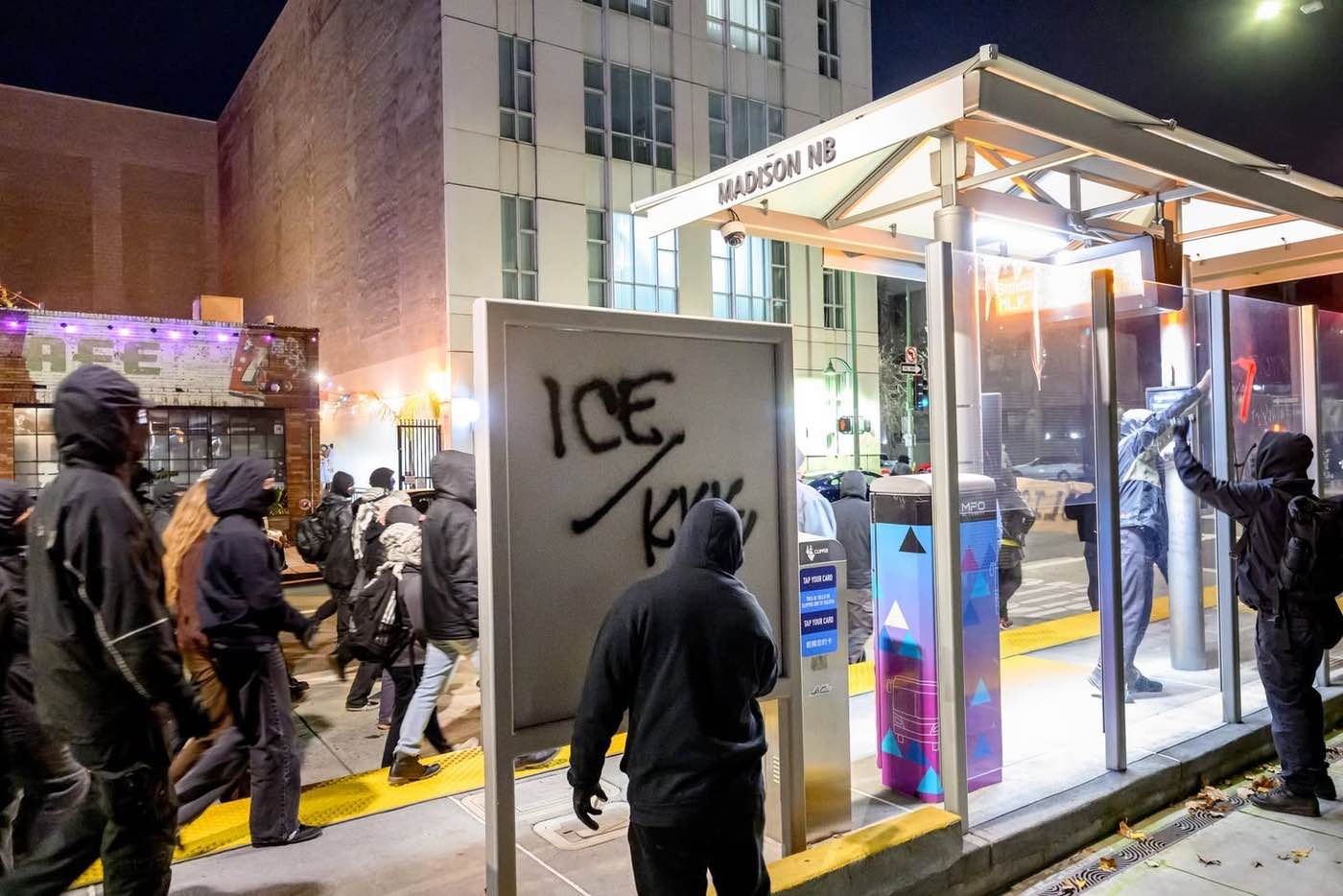
The crowd marched past the Alameda County Courthouse, decorating it with slogans before passing Oscar Grant Plaza to reach the Oakland Federal Building. Protesters smashed 47 windows on the building and covered it with spray paint to mark it as a site of ICE operations in the Bay Area—a fact that was relatively unknown to the public at the time. Energy was high and chants were spirited, and many who were present described the event as the largest black bloc they’d seen in the Bay Area since the 2020 uprisings. Protesters stayed tight and watched each other’s backs. The crowd maneuvered quickly, stayed together, and was able to evade law enforcement until it dispersed.
The response to this action was overwhelmingly positive. As protesters smashed windows and spray-painted messages, passersby cheered and motorists honked their horns; some cars even maneuvered around the crowd to slow down the police cruisers in pursuit. The following morning, local influencers flocked to the federal building to film videos praising the action. An article about the event that appeared in the San Francisco Chronicle garnered traction and received support even from liberals. Over the next few days, damn near every Oaklander learned what had taken place that night, and learned that ICE had been mobilizing out of the federal building in our beloved city.
Overall, attendees described the action as successful. It demonstrates an offensive strategy that is replicable anywhere ICE is present: marking out and demystifying the site of ICE operations to the public and attacking their infrastructure, while garnering support and input across the political spectrum. The reorientation towards militancy across political tendency showed that Oakland still has deep roots in confrontational struggle and the necessary backbone to fight the state. This action indicates that the movement against ICE and the colonial empire at large is gaining power and gaining new capacities. The diverse range of speakers, attendees, and supporters would not have been possible without the months of coalition building and public-facing projects that provided people new to movement spaces an in-road to militancy.
There are limits to every action and every political project, of course. While the January 10 action at the federal building was successful in its aims to normalize militancy and disrupt federal infrastructure, ICE continues to abduct our friends, families, and neighbors, and their funding and power grow daily. Seizing vengeance for our martyrs is not the same as achieving justice, nor does it undo the grave harm happening all around us.
The people of the Bay Area want ICE out of our home and out of everywhere. We know that the fight against ICE is the fight to free the land and to free all oppressed peoples everywhere. We know that we must build a left-wing mass movement that is lasting and resilient—that has the capacity to topple the existing empire. And we know that to accomplish that, we need each other.
ICE, the police, imperialist aggression, and all forms of state violence succeed when there is a lack of organized opposition, when they can carry out their operations clandestinely with no pushback. When we identify strategic chokepoints and intervene, we win. When we use intervention as a means of building towards mass uprising, we win.
Smashing windows alone under cover of darkness isn’t automatically an effective political strategy, but it can become effective as a star in a broader constellation of resistance.
—xoxo, anonymous gay people in occupied Huichin / so-called Oakland, California